When my assessment jumped about $300,000 in one year, the first thing I had to figure out was how this tax even works. It's weirder than I expected, and the weirdness is the key to everything else.
Here it is. In most of the country, if your home's value goes up 10%, your taxes go up roughly 10%. Washington doesn't do that. Ours is a budget-based system, and that one fact explains most of what feels broken about your bill.
The honest version: taxing districts — schools, the county, your city, transit — each set a budget first. The tax rate is then calculated backward to raise exactly that budget. Your assessed value only decides your share of the total, not the total itself.
Three things follow from that, and they're the ones that surprise everybody:
- Your bill can go up even when home values fall. If the budget grows while values drop, the rate just climbs to cover it. This actually happened across King County during the 2008–2010 crash — values fell, plenty of bills didn't.
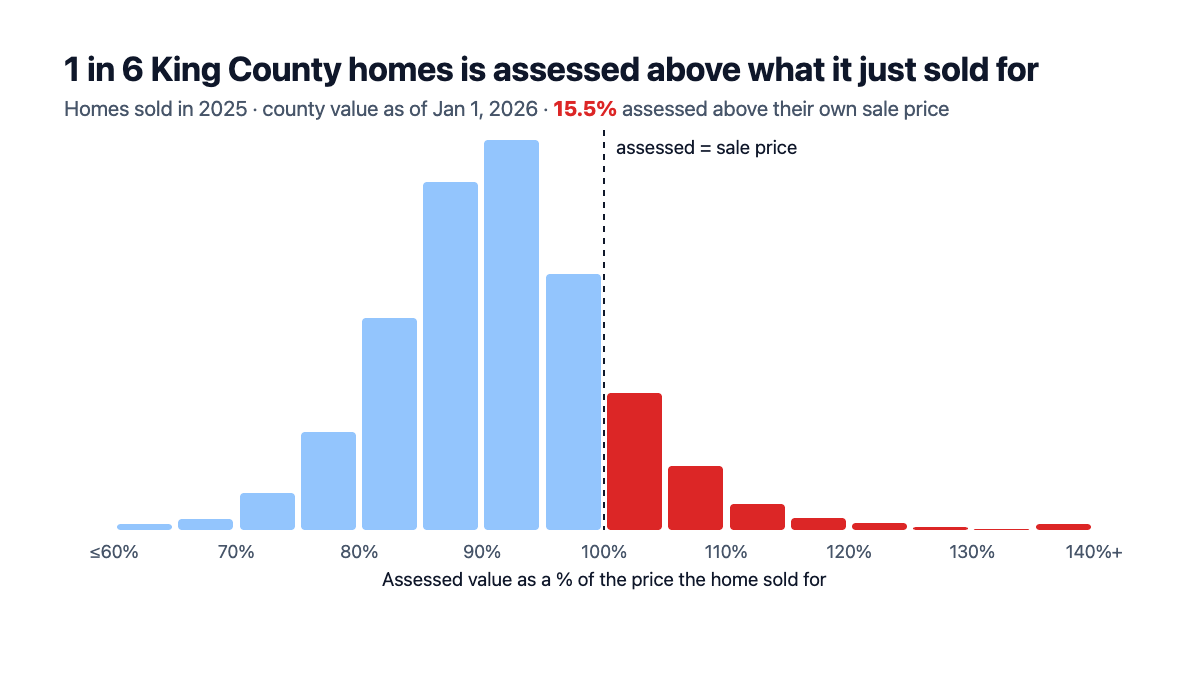
- What matters most is your value relative to your neighbors, not the absolute number. If your assessment jumps more than everyone else's, you eat a bigger slice of the same pie.
- State law caps a district's general levy growth at about 1% per year (plus new construction). The exceptions — the things that actually push bills up — are voter-approved levies and bonds: schools, transit, parks. Every fall ballot is, in a real sense, your property tax bill for next year.
The math that makes people furious
Two identical houses, both assessed at $1,000,000, in a district that needs $20,000. Each pays $10,000. Next year the district's budget grows the allowed 1%, to $20,200. The county's model bumps your house 30% and leaves your neighbor's flat.
The district collected almost exactly the same money. You just pay more of it, because your share of the total value went from 50% to 57%. That's the whole game: an assessment that's too high relative to similar homes moves the bill from your neighbors to you. And it's the one piece you can push back on.
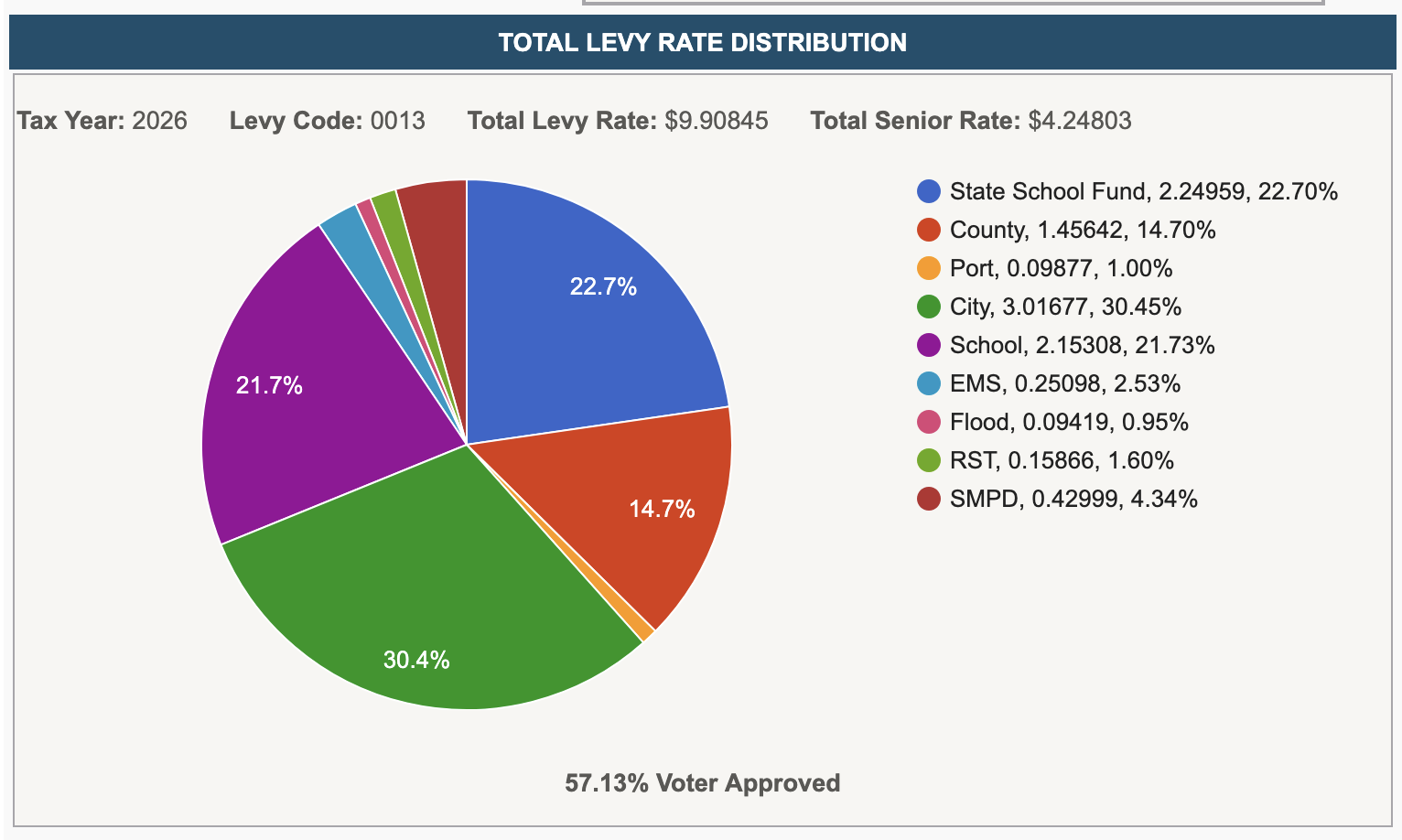
The rough math for a typical King County home: your bill is about $10 per $1,000 of assessed value — roughly 1%. So a $900,000 home pays somewhere near $9,000 a year. The exact rate depends on your neighborhood, because your bill is really a stack of separate levies added together.
Which raises the obvious question: a stack of what, exactly? That's the next post — where your money actually goes. And if your assessed value is the part that looks wrong, skip ahead to how to appeal it.